

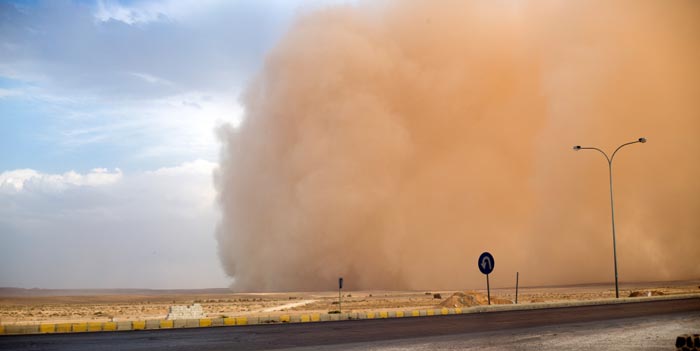
Why do I always refer to our planet as a living organism? Cuz it actually is. Something happens somewhere; the effect happens elsewhere. Say you graze your limb on that one shrub you’re allergic to, your skin flares up, rashes, itchiness, and then at times even a fever. Oh, this fever doesn’t stay localized. It travels. It disrupts the rhythm of the heart. It changes the way the feet move on the other side of the body.
In the summer of 2010, Russia caught such an allergy. Hottest summer the country had seen in 130 years. Imagine a “flash drought” so intense that it turned 13 million acres of crops into useless twigs. 17% of Russia’s total crop area gone! The grain output, which was nearly 100 million tonnes just a year before (2009), shriveled to 60 million.
Russia is one of the world’s great breadbaskets. When this smoke cleared, Vladimir Vladimirovich did what any nationalistic body might do: they banned grain exports to protect his own people.
Remember: “Protectionism at home is a shockwave abroad”. More on this statement later.
So, Export ban sent global wheat prices screaming upward by nearly 40% in just a few weeks. If you were a commodities trader in Chicago or London, it was a day of numbers and charts. But if you were a normal family in Cairo, it was a day of survival.
Now rotate the globe n come to the middle east. Egypt. The world’s largest wheat importer. Half of that wheat came from Russia. When the taps were turned off, the Egyptian government’s budget for bread subsidies was strained to the breaking point an extra $700 million was needed just to keep the price of a loaf steady. But the private sector the flour prices skyrocketed.
Something Similar happened in Tunisia, already there was unemployment then came the food inflation, feel free to google and learn more about the tragic death of Mohamed Bouazizi. What came next was an uprising.
The rallying cry of the Egyptian revolution wasn’t just a political slogan: “Aish, Horreya, Adala Egtema’eya” (Bread, Freedom, and Social Justice).
In Egyptian Arabic, the word for bread—Aish—also means “life.”
When the cost of life becomes too high, the fear of police, regime, and change jumps right out of the window.
I keep talking about the importance of the borderless world. Its instances like these make us realize that the borders we drew on maps did not stop the heat of a Russian summer from starving an Egyptian family.
Perspective, my dear readers, is a marvelous thing. For Kremlin, the ban was domestic security. To the world, it was a market correction. To the people in Tahrir Square, it was the final proof that the old world was no longer sustainable. With El Niño getting stronger and stronger each year and cunt trees like the US stop climate research funding is only going to give us something a surprise gift that the generations to come will feel harder and you and me.The Arab Spring was many things, but at its heart, it was a reminder that we are all connected by the same grain. We are one species, we are affected equally you and I.
Wake up, and look forward to the rains,
The Waterman!
References & Further Reading: * Sternberg, T. (2012). Chinese Drought, Wheat, and the Arab Spring. Applied Geography. * Werrell, C. E., & Femia, F. (2013). The Arab Spring and Climate Change. Center for Climate and Security. * FAO Food Price Index Archive (2010-2011). * The Guardian: “Russia’s ban on grain exports sends wheat prices to two-year high” (August 2010). * Al Jazeera: “Bread and the Arab Spring” (2011).
 Yesterday is ashes, tomorrow wood and only today the fire shines bright.
Leave a comment